Showing posts with label Italian. Show all posts

Friday, 18 May 2012

Jamon or Prosciutto - what's best?

It is an age old question, one that bisects opinion and catalyzes vociferous debate in the Latin part of Europe.  Where does the best ham come from? 

Today I want to talk about Italian prosciutto.  The word prosciutto comes originally, and not unsurprisingly, from the Latin "pro exsuctus" (which sounds a little bit like a spell from a Harry Potter novel).  Pro exsuctus means to suck out, or remove the moisture.  It doesn't take a scientific genius to work out whats going on here.  The leg of ham (or boar) is dry cured in salt to remove all the moisture ( a process that usually takes 2 months or so).

It seems the Italians, indeed the Romans were rather thrifty.  They made dried pasta as a means of storing wheat and they made prosciutto as a means of storing ham, in an age where refrigeration was far from inception.

Prosciutto proliferated out of the Northeast of Italy into Slovenia and the former Yugoslavian countries.  I have eaten prÅ¡ut in Croatia and can attest to its very high quality indeed (arguably better than some Spanish and Italian hams).

In my opinion I think both jamon (iberico) and prosciutto have their places, and are more compatible with certain ingredients than others.  I would also be happy to use cook prosciutto (like the wrapped asparagus I made recently) but I would not put pata negra in the oven (it's a waste).

Last night I simply served some prosciutto crudo with potato cakes and it was epic.  Simple dinner, but high-rolling taste.

Potato and Cabbage cakes with prosciutto crudo


Wednesday, 9 May 2012

Yesterday I are been mostly eating meatballs.

A further foray into the frozen wastes of our freezer elicited the discovery of a half pack (250g) of minced pork.  Well, it looked like pork and the label said pork, so it must have been pork?  Rather considerately, we received our vegebox yesterday, which meant that I actually had some fresh ingredients to work withI decided to make meatballs with red pepper and onion in a spicy tomato sauce.


I'm not sure why, but I do believe that this recipe works best with a "long" pasta - liguine, tagliatelle or parpadelle for example.  Naturally all our "long" pasta was depleted and I had to reach for the ever ubiquitous fusilli.  I honestly think that should there ever be nuclear Armageddon the human race will righteously be saved by fusilli.  No matter how empty your cupboard is, there will always be a half-used pack of supermarket fusilli tucked away at the back.


Meatballs with spicy tomato sauce.

  •   250g of mince will eke out 9 meatballs if you are careful.  If possible a mix of  beef and pork works best.
  •   Empty the minced pork into a bowl.  Season generously.
  •   Finely (and I mean really fine) dice half a Romano pepper and half a small onion. Add to the bowl.
  •   Add half a teaspoon of chilli powder.
  •   Add a teaspoon of regular paprika.
  •   A few finely chopped sprigs of thyme make a tasty addition.
  •   Shape into small balls, smaller than a golf ball, but bigger than a marble.
  •   Add olive oil to a large, heavy-based frying pan.  Fry the meatballs on each side.  Do not turn them too frequently.  Build up a nice caramelized crust on each side.
  •   Remove from the pan.
  •   Add a sliced onion and the rest of the Romano pepper, sliced into the pan.  Add some more olive oil if necessary.
  •   Start to sweat the onion and peppers.
  •   Chop 3 cloves of garlic.  Throw into the pan.
  •   Once the ingredients in the pan are softened add a glass of decent wine.  A Chianti or a nice Primitivo would work.  Boil off the booze.
  •   Add a tin of peeled plum tomatoes, a squirt of tomato puree, a squirt of Worcestershire sauce and a squirt of tabasco.
  •   Add a bay leaf.  Check and correct the seasoning if necessary.
  •   Add the meatballs back to the sauce.
  •   Cook on a low heat for 30 minutes.
  •   Serve with pasta and some cheese!


Friday, 27 April 2012

Ready, Steady, Cook!

I decided to play, "Ready, Steady, Cook!" last night.  This is a game, not unlike a Victorian parlour game, whereby one investigates the dregs remaining at the back of the fridge compartment and tries to envisage making something faintly edible.  Often I am posed with interesting culinary paradoxes like custard, sweet potatoes and partially fermenting spring onions.  Last night I was distinctly blessed with the following:


  1.   Two Leeks
  2.   An onion
  3.   A red pepper
  4.   Some garlic
  5.   A tin of tomatoes (in the cupboard, not the fridge)
  6.   Some fusilli
  7.   Cheddar cheese.
This is what I managed to concoct:


On the first day God said, "Let there be light!", on the second day God said, "Let there be firmament!".  And there was.  On the third day He said, "Let's have a pasta bake!".  

Pasta bake is rather like martini bianco, or cherry brandy.  You left it at the back of the drinks cabinet, you got thirsty and that's all there was to drink, you drank it and then you remembered just how lovely it is. 


Veggie Pasta Bake
  •   Chop your onion, your pepper and leeks into manageable chunks and add them to a pan with some olive oil on medium heat.
  •   Add some garlic - about 3 or 4 cloves should be enough to eradicate the flavour of the leeks.
  •   Cook until the vegetables have softened 
  •   Add some red wine.  Increase the heat, boil off the booze.
  •   Add the tomatoes, a squirt of tomato puree and keep the heat on to reduce.
  •   Meanwhile boil some pasta.  I used fusilli last night.  Don't worry about it being al dente - you are going to obliterate it in this recipe.
  •   Drain the pasta when it's ready and add to the tomato and vegetables.  Mix together.
  •   Pour the contents into a decent sized, oven compatible receptacle.  
  •   Sprinkle some cheese on top.
  •   Cook until the top is crispy and golden, about 20 minutes @ 180C
 Tonight is the night of our monthly curry club.  We are heading out into the darkest depths of Kingston-upon-Thames to treat our tastebuds to something of a Bangladeshi nature, so no cooking for me tonight! 

Thursday, 26 April 2012

Asparagus officinalis

The end of April heralds many things in England:  continual rain, the hosepipe ban, some more rain and the onset of the asparagus season!  Most of the year we are able to buy asparagus in our supermarkets, often those who buy it pay no attention to the fact that it has been flown 6,315 miles (assuming normal air routing), from Peru.  Why do we insist on being able to eat vegetables or fruits at our taste's demand?  Surely it is simpler, more tasty and easier on the planet to eat whats being grown in our own fair land?

Asparagus is one of my favourite vegetables.  I adore its texture and its nutty taste.  It is so flexible (and I don't mean in structure) and can be steamed, par-boiled, griddled, fried, roasted and eaten raw.  It really should not be messed about with, a simple dressing of butter, and maybe some garlic and lemon if you are feeling a bit frisky.

Should we talk about urine?  Why not.  Many people find that after eating asparagus their wee smells, shall we say, unsavoury?  Indeed, Louis Lemery, in his 1702 Treatise of all sorts of food, said, "[Asparagus] causes a filthy and disagreeable smell in the urine, as everybody knows".  Apparently some people can smell this odour, and some people cannot.  It's a little bit like the ability to roll your tongue into a tube, you either can or you can't - and its down to genetics.  I, mercifully am unable to detect this offensive odour in my urine, but then I am not particularly fond of dipping my head into the porcelain bowl to savour the smell of my own wee. 

I had some proscuitto in my fridge, so I decided to wrap up each little spear with some, dowse it in olive oil and pepper and roast it until it became crisp on the outside.  I washed each spear, then bent them in my fingers until I reached the normal snapping point - this proffers one with the point at which the vegetable is still crisp (and not woody).

Pre-cooked asparagus wrapped in proscuitto

I had some fresh, red, vine tomatoes in the fridge, along with some small green chilli's and coriander.  I decided, oddly, to try serving this with a red salsa.


Fresh Tomato Salsa
  •   Peel and de-seed 3 large tomatoes.  Chop quite finely.
  •   Add 3 finely chopped spring onions.
  •   Add a bunch of finely chopped fresh coriander.
  •   Peel and mince 3 cloves of garlic.  Add to the mix.
  •   In this salsa I added some chopped, peeled cucumber.
  •   Add 2, finely chopped green chilli's (seeds intact).
  •   Squeeze the juice of one lime (or lemon) into the mixture.
  •   A good pinch of salt, and pepper should be added to taste.
  •   Mix thoroughly.
It should be noted that, last night I decided that 5 green chilli's would add a delectable "kick" to my salsa.  It's funny what a can or two of San Miguel can do to one's culinary brain.  This was way too much chilli, and much milk was needed to cool the inferno deployed by this beast of a salsa.  I recommend 2 chilli's!

We had the salsa with 5 wrapped spears of asparagus last night, but in all honesty it felt like a starter.  We both needed something else to go with it.  Pleasingly, though, the combination of salsa seemed to compliment the salty ham spears and I will use this again.


Monday, 16 April 2012

Fusion!

Fusion cuisine is always something that has intrigued me.  It is not something that I have often tried my hand at, as, in my opinion it is necessary to have a very thorough and very diverse knowledge of cross-cultural cuisine.  It is something I am diligently working on, but not something I have mastered, by any means.

I can say, though, that I have eaten some really nice examples.  Peter Gordon's restaurant and tapa bar in Marylebone High Street are an excellent example of how South East Asian flavours and dishes have been fused with European (and, of course Kiwi) cooking to create a superb assemblage.  

Whenever I go out to eat I prefer to pay for something that either I cannot make myself, or do not like to cook.  The only exception to this rule are Indian restaurants, which I flock to given the slightest glint of hope.  These days I do not eat out that often, but when I do I like to ensure that I am trying something new, or eating something spectacular.  

As is quite often the case on a Sunday night, I was scrabbling around the back of the fridge trying to find something to concoct.  It's a little like playing lucky dip - without the sawdust.  I needed to make something quick and tasty.  The 4 cooking chorizo seemed to be beckoning me.  I decided to make a chorizo pasta.


I had a chat with a fellow blogger the other day regarding certain websites that promote food photography.  I am definitely of the opinion that taste should come first, and if it looks good then that's a bonus.  I do try to make my dishes look attractive, but it seems, from the above photograph, that last night I was oblivious to the streaks of orange-toned oil smeared around the rim of my bowls.  I do apologize for this temperanillo-fueled oversight.

This dish was really a subtle tweak on the carbonara recipe I made earlier.  Initially I tossed the pasta in the rendered chorizo juices, then, instead of using egg yolks I folded a little unsalted butter into the pasta to create a silky coating.  

Again, I used the tripoline pasta which yields an appetizing bite when cooked al dente.

Thursday, 12 April 2012

Coal-miners pasta

Last week we had poor man's potatoes and "angry pasta", this week I thought we'd continue our trend of anthropomorphic dishes with "coal-miners pasta" - or as we know it more readily "pasta alla carbonara".

Tripoline alla carbonara

I am always on the lookout for new types of pasta to buy - one I am finding hard to source is bucatini (that's the one that is like spaghetti but has a hole (buca) running through it).  During our recent sojourn to a rather well-known supermarket I noticed "tripoline" on the shelf - a pasta I had neither heard of, or seen before.  Tripoline is a long, ribbon-like pasta, where one edge is straight and the other is ruffled.  It looked like an ideal type of pasta to try a carbonara with.


Tripoline pasta

As you may have ascertained, the word carbonara is said to have originated from the word "carbonaro", which is the Italian word for a charcoal burner.  This hearty dish of pasta, eggs, bacon and cheese was incepted to fill the depleted stomach's of the men who made the charcoal.

Carbonara was always a style of cooking that I viewed with circumspect.  The concept of cooking with raw eggs filled me with dread for many years (thank you Edwina Currie).  I have managed to conquer my fear of raw eggs in recent years and am confident I can now cook a rather delectable dish. 


In fact, carbonara is ridiculously easy to concoct - you do, however, need to keep one or two facets in check.  Your "sauce" should be silky and glistening - coating the pasta, not drowning it in raw egg.  The egg should never cook - scrambling is definitely to be avoided.  Be careful with your seasoning, as it is very easy to over-salt this dish - considering the addition of pancetta and pecorino/parmegiano.  


Here's how I make mine:


Tripoline alla Carbonara

  •   Cook 5 or 6 thin slices of pancetta in a heavy base pan.  When they are beginning to crisp, remove them and shake the juices off, into the pan.
  •    For two people, use 2 eggs.  Break one egg directly into a cup.  The other egg needs to have its yolk removed.  Add the yolk to the cup.  Beat the eggs together.
  •   Finely grate some pecorino or parmegiano.  I guess I used about 30-40g.  
  •   Salt a large pan of water, and heat it until it is rolling to a boil.
  •   Add your pasta and cook until its just before al dente stage (i.e you think to yourself, "it's almost ready").
  •   Drain the pasta, reserve some of the water just in case.
  •   Add the drained pasta to the pan which you cooked the pancetta in.  Toss it in the bacon fat.
  •   Add the beaten eggs and again, toss into the pasta.
  •   Cut the pancetta into small pieces, add to the pasta and toss.
  •   Add 2/3 of the cheese.  Toss in. 
  •   If the pasta looks a little dry you can add a little bit of the pasta water, of if you like, you can add a further egg yolk.  The dish should not be swimming in juices!
  •   Season with lots of black pepper. 
  •   Serve with the remaining cheese on top. 

Monday, 9 April 2012

A rather hot affair.

My girlfriend is quite aware of it, I don't try to hide it.  I've been having a very hot affair for some time now, and I cannot stop myself.  Since the first time I ever went to SE Asia, to Malaysia, back in 2002 I have been horribly addicted to chilli's.  I eat them with everything, and if I can't get them, I douse whatever I am eating in Tabasco, or some kind of chilli sauce.

It has been scientifically proven that chilli's elicit a euphoric sensation when eaten (rather like chocolate, but a different chemical), they are addictive and, you build a resistance to them.  All in all, it sounds like many a drug you see emblazoned on the front of newspaper, headlining the next killer craze.

With this chilli addiction in mind, I like to keep a healthy stock of the fiery fruit to fuel my fixation.  Here's a lowdown on the chilli's I like to have:

Weapons of choice

So, going from top left, in clockwise rotation, you will see, lemon chilli, bhut jolokia, cherry bomb, cayenne, generic Thai red, and some kind of Mexican red chilli (I lost the label).  They each have their culinary uses, but all of them are dried.

For example, the lemon chilli I like to use in pasta, the jolokia is obviously reserved for fiery Indian dishes, and the generic red Thai chilli I impart into anything of a SE Asian nature.

I only buy fresh green chilli's, usually the birds eye, thin, finger-like ones you can get from Asian grocers.  In Indian cuisine you only ever use fresh green chilli - red chilli's are always dried.

It is possible to rehydrate these chilli's if you desire.  This can be achieved by warming up some water, not to boiling point though, just tea temperature.  Then I cut the top off the chilli to allow the water to ingress (otherwise the chilli just floats on the surface).  Put the chilli in the hot water, get the water inside it too, and try to sink it.  Leave it for at least 30 minutes, an hour if possible.  It should have regenerated some of its water content, and become plump and juicy, once more.

Yesterday we had my parents, and one of my nieces over for Easter lunch.  My father is a fussy old so and so, and doesn't like any "foreign muck".  I made him a Vlaamse stoofkarbonaden and passed it off as a Lancashire hotpot.  This neutral lunch inspired me to fire up the evening with something a bit spicy.  I plumped for a Linguine All'Arrabiata (angry linguine!):

Linguine All'Arrabiata 

  •   Finely chop one onion.
  •   Add a few glugs of olive oil to a heavy-based pan.
  •   Medium to high heat, add the onion and cook until just coloured.
  •   Add 2 cloves of minced garlic.
  •   Finely dice up half a dried chilli (I used a lemon one).  Add to the pan.
  •   Whizz a can of peeled plum tomatoes in a mini blender.
  •   Add the tomatoes.
  •   Season the sauce and keep on a medium to high heat.
  •   Reduce the water content out of the sauce until it is glossy and sticky (takes about 15 minutes).
  •   Cook your pasta to al dente, drain and add to the sauce.
  •   Toss in the sauce.
  •   Serve with finely grated parmegiano reggiano.

Sunday, 1 April 2012

Fast Food - Pizza

Potato and Pepperoni Pizza

No!  I did not order a pizza last night.  Why anyone would want to buy a pizza from the supermarket, or to order one from a local delivery service is beyond me.  With just a few ingredients you can have a much tastier, healthier (have you any idea how much salt they put in those things?) and in many cases quicker meal than if you had picked up the telephone.

There are many things that revolve around in my head when I am trying to get to sleep.  Quite often it is Keira Knightley.  One, more tangible icon, though, is a wood-fired oven.  I would love to have one of those cocoon-shaped brick ovens in my back garden, where it is possible to conjour up impressive breads and pizza's.  Maybe one day, when we have a large enough garden I will treat myself to one of these luxuries (along with the wine cellar, tandoor and inflatable film star).

A quick reconnaissance of the fridge revealed a rather disappointing paucity of pizza toppings - salami and a potato.  Here's how to make the dough:


  •   I never measure out the flour, which in last night's case was strong Canadian bread flour.  I imagine it was about 300-350g.  
  •   I added a small pinch of sea salt.
  •   In a jug I added about 200ml of warm water and a nearly full teaspoon of quick yeast.
  •   I slowly add the water and mix with my solitary index finger (to roughly resemble the action of a dough hook) until I have a ball of pizza dough.  It should be pliant and slightly sticky.
  •   Flour a clean work surface and kneed it for 5-10 minutes until it is soft, stretchy and no longer sticky.
  •   Place in a bowl and leave for 30 minutes.
  •   Knock it back and split into two.  Roll each ball into an amorphous pizza shape, the dough should be 4-5mm thick.
  
There are two ways to make a tomato sauce.  The quick way, and the not-so-quick way.  Today is the quick way:


  •   I had 3/4 of a can of peeled plum tomatoes left over.  I put them into a mini-blender.
  •   Add a squidge of tomato ketchup.
  •   Blend to a smooth paste!
I'm sure you don't need me how to tell you how to put tomato sauce, or toppings onto a pizza.  The potato, however was sliced razor thin using a vegetable peeler, and the cheese I used was a combination of tasteless cheap cheddar and salty pecorino.

It takes about 10 minutes in the oven at 180C (fan assisted).  It will be crispy around the edges, but perfectly cooked in the centre.


Wednesday, 28 March 2012

Risotto!

Rice seems to have managed to wiggle its way into just about every type of cuisine in the world.  Of course, everyone is familiar with its compatibility with Middle-eastern and Asian foods, from Indian to Indonesian, but its proliferation into paella, rice pudding, tex-mex and of course, risotto is not to be overlooked.  

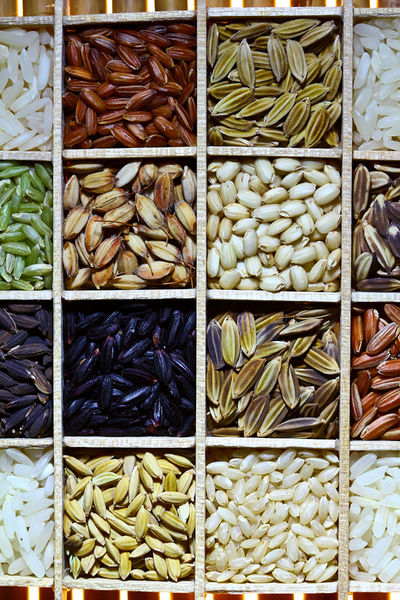
I am lead to believe it is probably a combination of far eastern merchants and the Moorish incursions to Iberia that introduced the dissemination of this wonderful grain to Europe.  There are many types of rice varieties - the red camargue rice of France, bomba rice from Spain and basmati from India, Pakistan and Bangladesh.


I keep only two varieties of rice in my cupboard - basmati and arborio.  Arborio is used exclusively, (in my house) for making risotto.  There are some golden rules to making risotto, and as per usual I have a list to provide you with.  Transgress these at your peril:


  •   Risotto always starts with a sofritto - that is, onions, garlic, oil and butter.
  •   Never add any type of cheese to a risotto except for parmigiano regianno (I can probably excuse the use of grana padano or perhaps pecorino).
  •   The creamy consistency of a risotto is achieved by the slow stirring of the rice, releasing its starches.  It is never achieved by adding cream or ricotta.
  •   Ensure your stock is nice and hot when you begin adding it.
  •   Never overcook the rice.  It should have some bite left in it.
  •   The final consistency should be firm and not sloppy.

Tonight I am going to cook a bit of a melange, a fusion perhaps, of a risotto - and this is utterly guided by what I have left in my fridge.  I have a half ring of smoky chorizo, 2 small courgettes and some frozen peas left, mulling around not doing very much, just crying out to be used.  Here is how I will make my risotto:

Chorizo, courgette and pea risotto
  
  •  Chop the chorizo into small chunks.  Dry fry in a thick-based skillet and remove from the pan when the orange oil is released and they have become slightly crunchy.  
  •  Finely chop one medium onion, the courgettes (2 small ones, or 1 large) and 2 cloves of garlic.  Add a few good glugs of olive oil and a generous knob of butter.  Add the chopped ingredients.
  •   Fry on a medium heat until they absorb some of the oil and butter and become glistening.  Do not colour!
  •   Add the arborio rice, I usually just eyeball how much is needed.  Stir the grains to ensure that each is coated with some oil and butter.
  •   Heat your stock up - not boiling, but hot.
  •   Add a large glass of white wine - something dry, not fruity.  An orvieto, verdicchio or soave are fine.  Increase the heat and boil off the booze.  
  •   Add a handful of frozen peas.
  •   Add a ladle full of hot stock to the pan.  Stir slowly and not too vigorously.  
  •   When the stock has been incorporated into the risotto, add another and repeat this process until you have added all the stock.  For two people I would use 200g rice 500ml stock. 
  •   Check the rice, it should be soft on the outside and a bite in the centre.  The consistency should be creamy, thick, but not wet. This should be roughly 20-25 minutes.
  •   Add the chorizo to warm up.
  •   Turn the heat off.  Add 20g of finely grated parmigiano, a few good turns of ground black pepper.  Check for salt, it may not need it due to the salty chorizo and parmigiano. 
 Edit : Here's the risotto from last night!